| --- |
| license: mit |
| --- |
| # gguf-code: IDE AI Coding Assistant |
|
|
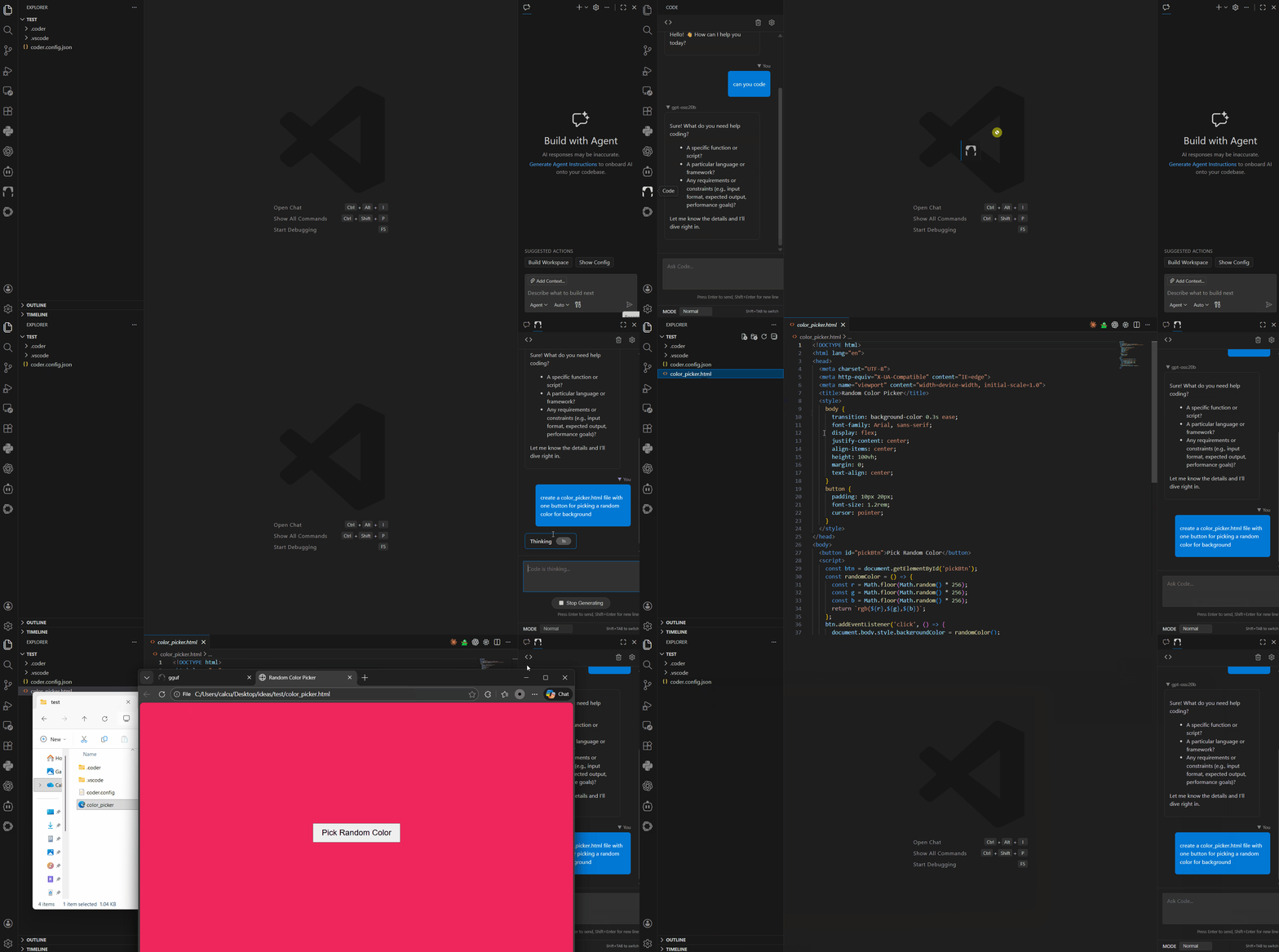
| Monster coding agent lives in your IDE - moving beyond a CLI bridge to a fully native IDE AI assistant. |
|
|
|  |
|
|
| Shipped to vscode marketplace (currently unpublished; download it (.vsix) from [open-vsx](https://open-vsx.org/extension/gguf/gguf-code) and `code --install-extension gguf.gguf-code-x.x.x.vsix`) or it's compatible IDEs, i.e., cursor, windsurf, antigravity, etc., [marketplaces](https://open-vsx.org/extension/gguf/gguf-code) |
|
|
| ## Features |
|
|
| - **Native Chat Interface**: Deeply integrated webview clean ui for smooth chat interactions inside VS Code (and/or its clone/fork IDEs). |
| - **Embedded AI Engine**: Run Coder's powerful AI logic directly within the extension process - no external CLI tool required. |
| - **Project-Aware Context**: Automatically understands your workspace structure and active files. |
| - **Smart Tools**: |
| - `read_file`: Intelligently reads file contents with progressive loading for large files. |
| - `write_file`, `find_files`, and more (Coming Soon). |
| - **Live Diff Preview**: Preview AI-suggested code changes with standard VS Code diff views. |
| - **Diagnostics Integration**: Uses LSP diagnostics to help fix errors in your code. |
|
|
| ## Requirements |
|
|
| - Visual Studio Code version 1.104.0 or higher |
| - `coder.config.json` in your workspace root (for configuring AI providers). |
|
|
| ## Getting Started |
|
|
| 1. **Installation**: Install the extension from the VS Code Marketplace or via `.vsix`. |
| 2. **Configuration**: Ensure you have a `coder.config.json` in your project root (see example below, can be any OpenAI compatible API or local/self-hosted API). |
|
|
| lmstudio (localhost) example: |
| ```json |
| { |
| "coder": { |
| "providers": [ |
| { |
| "name": "lmstudio", |
| "models": [ |
| "openai/gpt-oss-20b" |
| ], |
| "baseUrl": "http://localhost:1234/v1" |
| } |
| ] |
| } |
| } |
| ``` |
| |
| ollama (localhost) example: |
| ```json |
| { |
| "coder": { |
| "providers": [ |
| { |
| "name": "ollama", |
| "models": [ |
| "gpt-oss:20b" |
| ], |
| "baseUrl": "http://localhost:11434/v1" |
| } |
| ] |
| } |
| } |
| ``` |
| |
| fetch from any api provider, see example below: |
| ```json |
| { |
| "coder": { |
| "providers": [ |
| { |
| "name": "openrouter", |
| "baseUrl": "https://openrouter.ai/api/v1", |
| "apiKey": "your-api-key", |
| "models": ["anthropic/claude-4.5-sonnet"] |
| } |
| ] |
| } |
| } |
| ``` |
| |
| 3. **Launch**: Click the "Code" monster icon in the Activity Bar (left sidebar) to open the chat. |
| |
| ## Usage |
|
|
| - **Chat**: Type naturally in the chat window. "Explain this file", "Fix this bug", etc. |
| - **Context**: The assistant automatically knows about your open files. |
|
|
| ## Architecture |
|
|
| This extension has migrated from a thin client (CLI bridge) to a thick client architecture: |
|
|
| - **Frontend**: React + Vite (Webview). |
| - **Backend**: Node.js Extension Host (running `ai-sdk-client`). |
| - **Communication**: VS Code Message Passing API. |
|
|
| ## Development |
|
|
| ```bash |
| npm install |
| |
| # Build both Webview and Extension |
| npm run build |
| |
| # Watch mode (rebuilds on change) |
| |
| # Terminal 1: |
| npm run watch:webview |
| |
| # Terminal 2: |
| npm run watch |
| ``` |
|
|
| ## Contributing |
|
|
| Contributions are welcome! |
|
|
| ## License |
|
|
| MIT |
|
|